In the early days of the internet, social media promised a way to connect with our communities and find things to do. But today, scrolling through your feed often feels less like a community gathering and more like navigating a digital minefield.
The culprit? Engagement-based algorithms. While platforms like Facebook, X (formerly Twitter), and Instagram were designed to bring people together, their business models now rely on keeping you staring at your screen for as long as possible. To do this, they reward “engagement”—likes, shares, and comments—above all else. Unfortunately, what’s most “engaging” isn’t always what’s most useful.
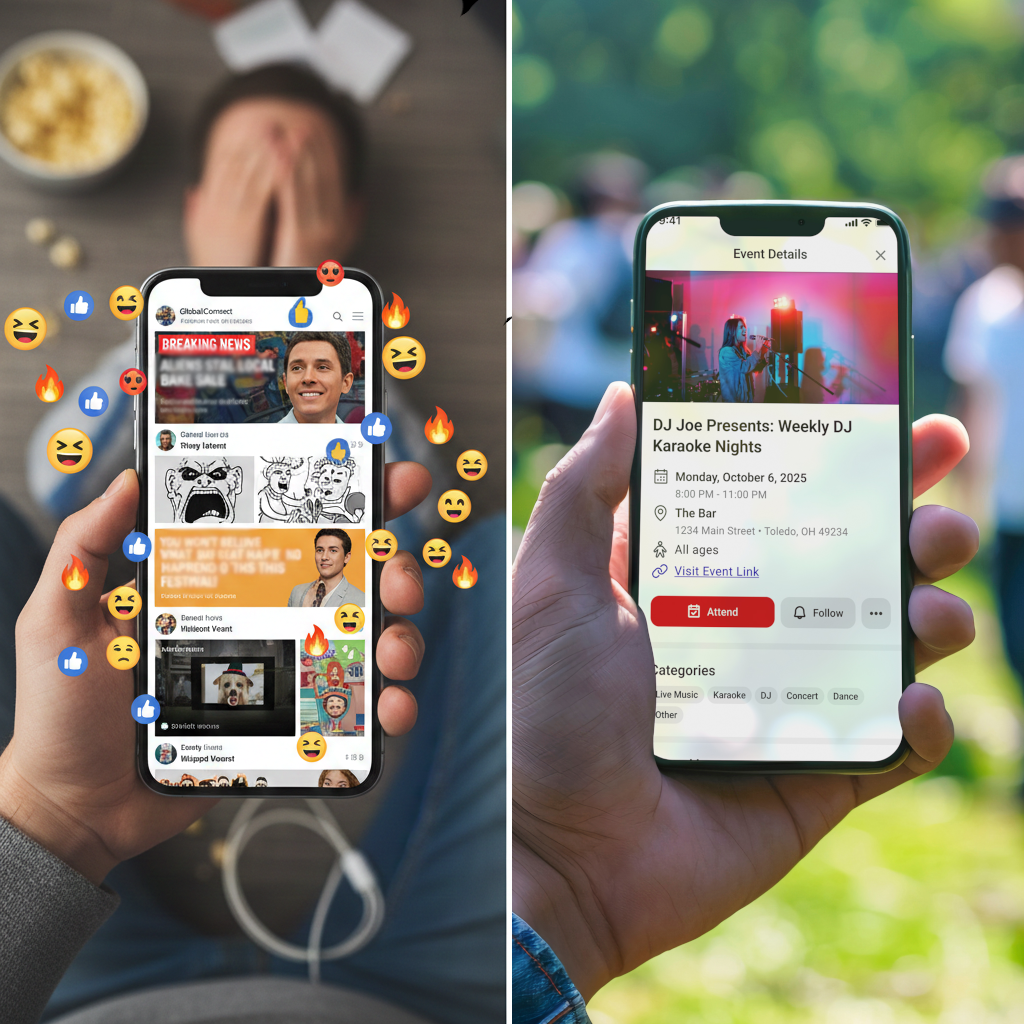
The Reward for Chaos: Satire, Fake News, and Clickbait
Most social platforms use a feedback loop that prioritizes high-velocity interaction. This creates a “race to the bottom” for content quality:
- The Satire Blur: Satirical posts are often shared as fact. Because they provoke strong reactions, the algorithm boosts them, leading to a “post-truth” environment where users can’t tell what’s real.
- The Fake News Incentive: Outrage is the ultimate engagement driver. Misinformation designed to make people angry spreads significantly faster than nuanced, factual reporting because it triggers an immediate emotional response.
- Clickbait Over Substance: When you’re looking for a local concert or a charity auction, you instead find posts with titles like “You won’t believe what happened at this festival!” only to find a 10-minute video with no payoff.
This clutter doesn’t just waste time; it creates digital fatigue. When users realize they are being manipulated by an algorithm that values their “rage-clicks” more than their time, they eventually stop looking for value on the platform altogether.
How Engagement Algorithms Distort Reality
| Feature | Engagement-Based Platforms | The Result for Users |
| Content Priority | Most “Likable” or Controversial | Important local events are buried under viral memes. |
| Discovery | Algorithmic “For You” Feeds | You only see what the AI thinks will keep you scrolling. |
| Revenue Model | Ad-driven / Data Mining | Your attention is the product being sold to advertisers. |
| Accuracy | Unverified / Viral | High risk of fake news, scams, and expired event info. |
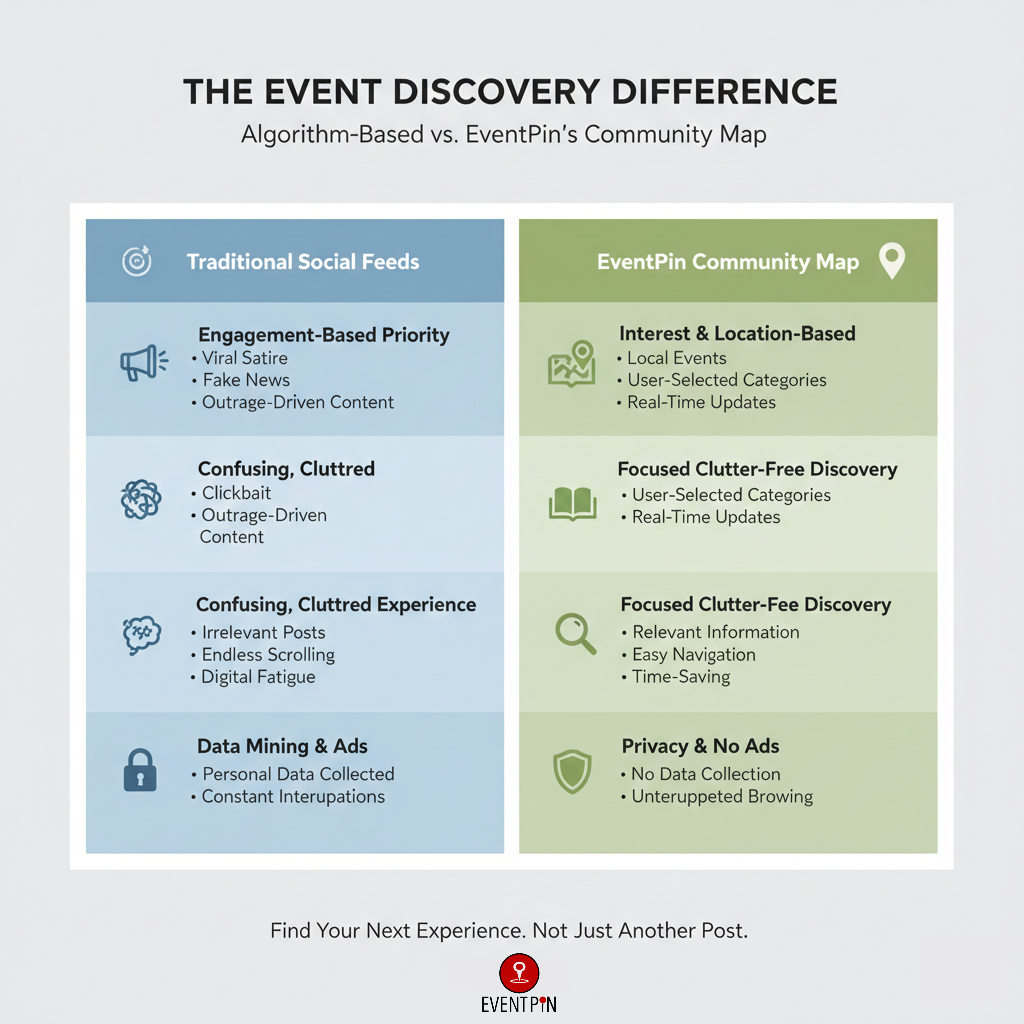
EventPin: A Better Way to Discover
At EventPin, we believe that finding something to do in your community shouldn’t require a background check on every post you see. We’ve intentionally built a platform that rejects the “engagement trap” to provide a cleaner, more valuable service.
1. No Algorithms, No Bias
EventPin doesn’t use secret code to decide what you “should” want to see. Instead, we put the power back in your hands. You set your categories, your dates, and your location. What you see is a direct result of your choices, not an AI’s attempt to keep you addicted to a feed.
2. Discovery by Location, Not Virality
Instead of showing you a viral post from three states away, EventPin uses a map-based interface. This allows you to pan and zoom through your actual neighborhood or a travel destination to find everything from garage sales and school fundraisers to major stadium concerts.
3. Zero Clutter, Zero Data Mining
Because EventPin does not reward “viral” engagement, there is no incentive for users to post fake news or clickbait. We don’t sell ads, and we don’t mine your data to build a profile on you. This keeps the experience focused entirely on one thing: helping you find your next great experience.
Take Back Your Time
Social media should be a tool for real-life connection, not a distraction from it. By removing the rewards for sensationalism, EventPin provides a high-fidelity window into your community—unfiltered, unbiased, and clutter-free.