
Imagine crafting the perfect announcement for your upcoming event. You spend hours polishing the imagery, refining the call to action, and hitting “Publish” on Facebook. You sit back and wait for registrations to roll in.
Then reality hits: only a fraction of your target audience actually sees it.
Some potential attendees don’t use Facebook at all. Others were offline when the post went out, buried under an algorithm update, or simply scrolled past it during a busy morning commute. If your marketing relies on a single channel—or treats channels as isolated silos—you aren’t just missing out on extra reach; you are actively leaving a massive portion of your audience behind.
To build an audience that truly pays attention, you need to master omnichannel marketing—and anchor it with a dedicated event hub like EventPin.
What is Omnichannel Marketing?
At its core, omnichannel marketing is the practice of creating a seamless, unified brand experience across every platform where your audience spends time. Unlike multichannel marketing—which simply means posting on different platforms independently—an omnichannel strategy connects those touchpoints together so they continuously reinforce each other.
Instead of treating your email list, Instagram, LinkedIn, TikTok, and website as separate islands, omnichannel marketing turns them into an interconnected web.
Why You Can’t Rely on Just One Channel
1. No Single Platform Reaches Everyone
Every channel has its own demographics, usage patterns, and quirks. A professional who checks LinkedIn three times a day might never open TikTok. A community member who relies on email newsletters might rarely check Instagram. Restricting your messaging to one platform guarantees you remain invisible to a huge share of your potential market.
2. Timeliness and Algorithm Limits
Even among users who already follow you, organic reach is controlled by complex algorithms. A time-sensitive event update posted today might not show up in a follower’s feed until two days later—long after the registration deadline has passed. Broadcasting across multiple touchpoints increases the odds that your message reaches users when it actually matters.
3. The Power of Message Resonance
Marketing psychology relies heavily on the “Rule of 7″—the concept that a user needs to encounter a brand message multiple times before taking action. When an individual sees your event on LinkedIn, catches a follow-up story on Instagram, and receives an update in their feed, the message moves from background noise to top-of-mind priority. Consistency builds familiarity, and familiarity breeds action.
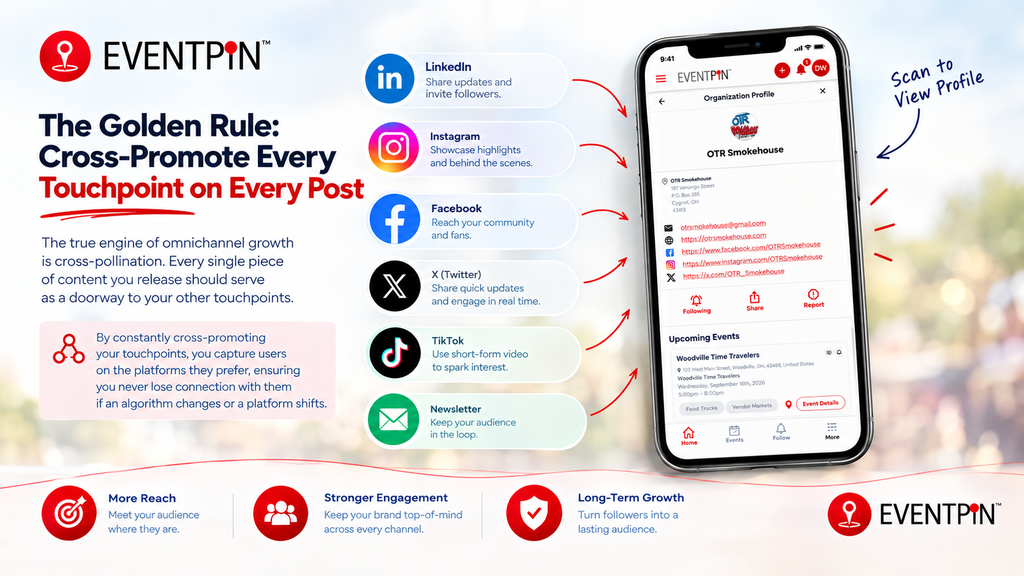
The Golden Rule: Cross-Promote Every Touchpoint on Every Post
The true engine of omnichannel growth is cross-pollination. Every single piece of content you release should serve as a doorway to your other touchpoints.
If you publish a post on LinkedIn, invite readers to follow your real-time updates on other channels or subscribe to your newsletter. By constantly cross-promoting your touchpoints, you capture users on the platforms they prefer, ensuring you never lose connection with them if an algorithm changes or a platform shifts.
How EventPin Turns Temporary Reach into Long-Term Audience Growth
Executing an omnichannel strategy sounds great in theory, but pointing your social traffic to one-off registration forms or temporary landing pages creates a major leak in your marketing bucket. You end up starting your promotional efforts from scratch every single time you launch a new event.
This is where EventPin completely transforms your marketing model.
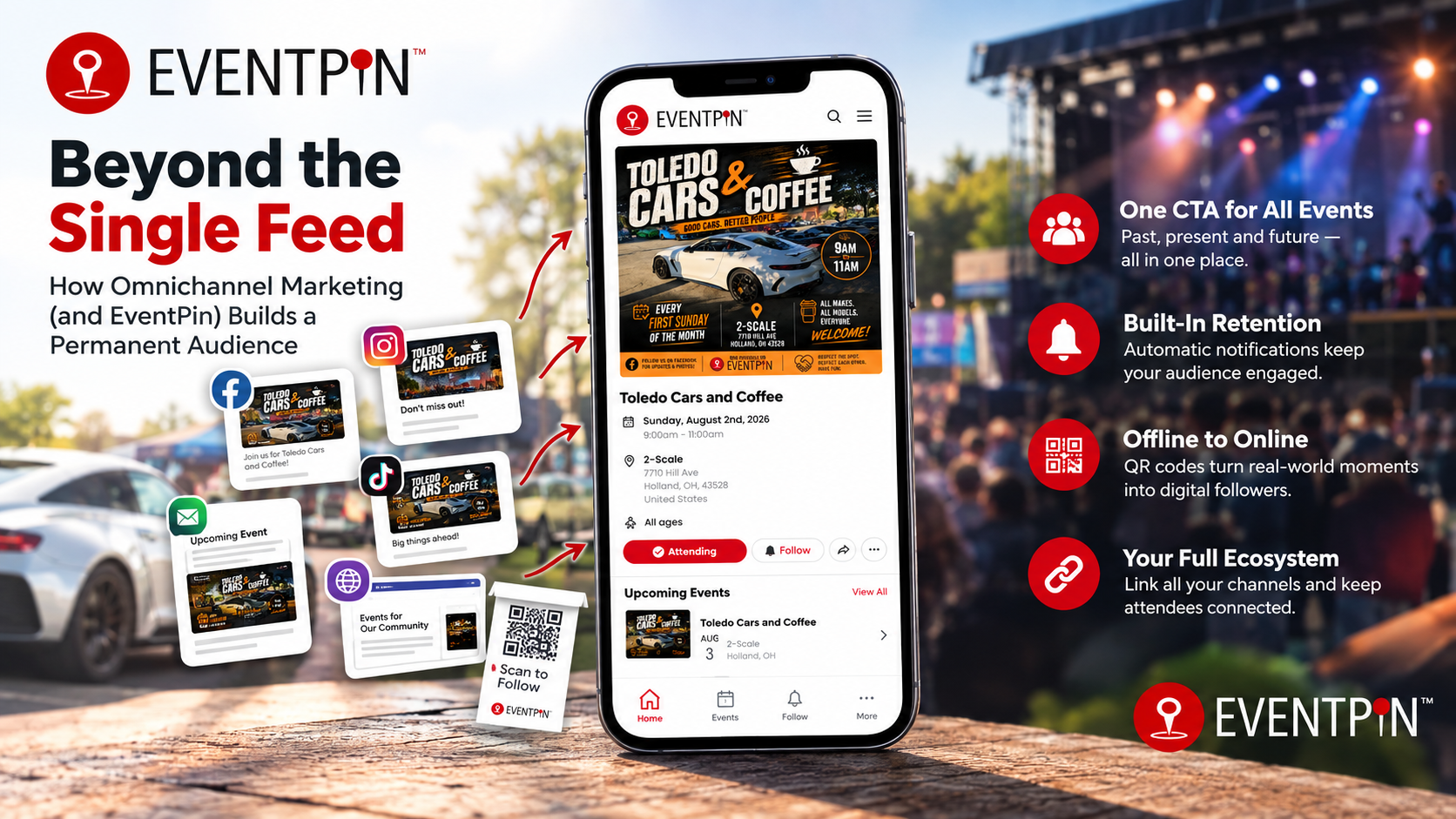
When you align your omnichannel messaging and direct all your Calls to Action (CTAs) across every platform to EventPin, you aren’t just marketing a single upcoming event—you are building a permanent event audience.
Here is why placing an EventPin Call to Action on every post is a game-changer for event organizers:
1. One CTA for All Your Current and Future Events
Instead of constantly changing destination links or losing past attendees after an event ends, your EventPin CTA acts as a centralized ecosystem. A user who clicks through to check out your current event immediately gets visibility into your entire calendar—present, and future.
2. Built-In Follower Retention & Automated Notifications
When you direct users to EventPin from your social posts, encourage them to click “Follow.” Once a user follows your profile on EventPin, they are automatically subscribed to updates. The moment you publish or update a future event, EventPin delivers notifications straight to them—bypassing social media algorithms entirely.
3. Seamless Offline-to-Online Conversion via QR Codes
Omnichannel marketing isn’t limited to digital feeds—it extends to physical banners, flyers, print ads, and social graphics. By embedding an EventPin QR code into your visual and print media, you convert offline foot traffic and casual image views into digital followers instantly. A quick smartphone scan brings users directly to your EventPin profile, allowing them to tap “Follow” in seconds and lock in automatic notifications for all your future events.
4. Complete the Omnichannel Loop via Your Organization Profile
A fully customized organization profile on EventPin serves as a launchpad for your entire brand ecosystem. By linking your other social media platforms and channels directly on your EventPin profile, you allow attendees who discover you through an event to seamlessly connect with you everywhere else you publish content.
Turn Touchpoints into Permanent Traction
In today’s fragmented digital landscape, staying on one channel isn’t enough—and starting your audience search from scratch for every new event is an unnecessary uphill battle.
By unifying your messaging across channels, cross-promoting your touchpoints, and anchoring every CTA to EventPin, you ensure that every post does double duty: filling seats today while growing an engaged, notified audience for tomorrow.
Ready to stop starting from scratch with every event? Start building your permanent audience on EventPin today.